6 min read
Blockout blinds for shift workers: an installer's guide
What separates a real blackout from a blind that just looks dark.
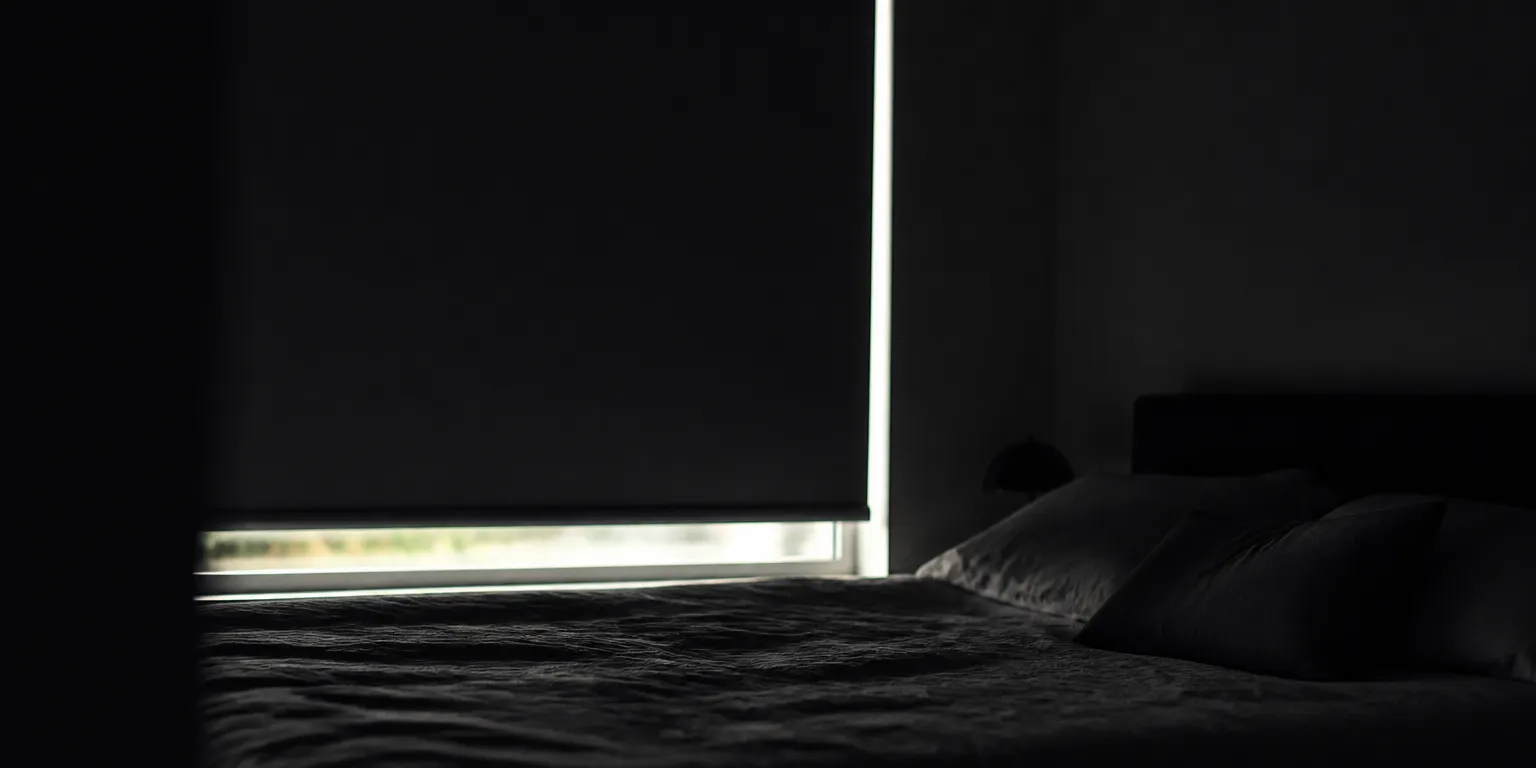
For genuine blackout in a shift worker's bedroom, fabric alone is not enough. You need a coated blockout fabric, side channels fixed to the reveal, a sealed top headbox, and a foam strip on the bottom rail. Get all four right and the room goes 99 percent dark at midday. Get any one wrong and a band of daylight slips through that wakes you at six in the morning anyway.
Key takeaways
- Blockout fabric blocks fabric-direction light. The light leak is at the edges, not through the blind.
- Side channels (aluminium U-tracks on the reveal) seal the vertical edges.
- A top headbox or pelmet seals the gap between the roller tube and the ceiling.
- A foam strip on the bottom rail seals the sill line.
- A slightly oversized flush-fit blind is the budget option; not true blackout but better than nothing.
- A second layer (curtain over blind) gives an additional dark layer for very light-sensitive sleepers.
Where the light actually leaks
The single biggest mistake people make on blackout blinds is buying expensive coated fabric and stopping there. The fabric itself does its job; modern blockout polyester from quality suppliers blocks essentially 100 percent of light through the fabric face. The light that wakes you up does not come through the fabric. It comes around it.
Four leak paths:
- The vertical gap between the edge of the blind and the wall (typically 5 to 15mm each side on a flush fit).
- The horizontal gap between the top of the blind and the ceiling (the roller tube has to sit clear of the wall, so there is always a gap).
- The horizontal gap between the bottom of the blind and the sill (the bottom rail rests on the sill but does not seal to it).
- The seam where the fabric meets the bottom rail (a thin glow line).
A standard flush-fit blockout roller deals with none of these. Light leaks at all four points. In a north-facing bedroom in summer, that is enough to put a band of light across your face by 6:30am.
Blinds
Roller, Roman, day-night and Venetian
Made to measure and fitted by the same person who quotes them. One contact from measure to install.
Side channels: the most important detail
Side channels (also called U-channels, light-block tracks, or sometimes mistakenly cassettes) are aluminium tracks fixed to the inside of the reveal on each side of the window. The blind fabric runs inside these tracks. The vertical edges of the fabric are inside the channel, so light cannot get past.
The channels add roughly 15 to 25mm of width on each side of the blind. They are typically painted to match the wall, but visible against most colours. For shift workers, that visibility is a fair trade for genuine blackout.
We fit channels on every blackout job for a shift worker brief. Without them, no roller blind is genuinely dark.
Top headbox or pelmet
The roller tube has to sit clear of the ceiling so it can rotate. That means there is always a gap of 30 to 50mm between the back of the rolled fabric and the wall behind. Light enters that gap from above and reflects down into the room.
A top headbox is a sealed enclosure around the roller tube that closes this gap. A built-in pelmet (a recessed ceiling pocket) does the same job and looks cleaner on a new build. Either one is essential for genuine blackout.
For new builds, see the builder fit-out checklist for the frame-stage detail that creates the recessed pelmet.
Bottom rail seal
The last leak path is the sill. A standard bottom rail rests against the sill but does not seal to it. A 2 to 3mm gap is normal and lets a thin glow line through.
The fix is a self-adhesive foam strip stuck to the underside of the bottom rail. The foam compresses against the sill when the blind is fully lowered and seals the gap. A small detail, but it turns an 80 percent dark room into a 99 percent dark one.
Free measure
Know what your rooms will cost
Roller blinds start around $150 a window installed. A written quote lands within two business days.
What about a curtain over a blind?
For very light-sensitive sleepers (newborns, severe migraine sufferers, and rotating shift workers), a heavy blockout curtain over a blackout roller adds a second light layer. The curtain catches any light that bypasses the blind and stops it from reflecting around the room.
For most shift workers, the four-detail setup (coated fabric, side channels, top headbox, bottom seal) is sufficient. The curtain layer is overkill in most cases.
Honeycomb blackout as an alternative
A blackout honeycomb blind in a side channel is a different way to solve the same problem. The cellular fabric provides additional thermal benefit (covered in honeycomb blinds and Melbourne winter heat loss) on top of the blackout function. For shift workers in older single-glazed homes, the thermal upgrade is worth the slight cost premium.
Common questions
Will a side channel work on a brick reveal?
Yes. The channel fixes to the brick with masonry plugs. The fit is the same as on a plaster reveal. Older homes with rough or out-of-square reveals sometimes need shimming behind the channel to get a clean line, but the function is identical.
Can I retrofit side channels to an existing blind?
In most cases yes, if the blind sits inside the reveal rather than overlapping it. The blind has to be removed, the channels installed, and the blind re-hung. Sometimes the blind needs to be remade slightly narrower to fit inside the channels.
What about motorised blinds for a shift worker?
Motorisation is a quality-of-life upgrade for shift workers, especially night-shift workers who get home tired. A timer or smart-home trigger drops the blind automatically before you arrive home. We use Somfy and Automate motors which integrate with most smart-home systems.
Is double glazing better than blackout blinds?
They solve different problems. Double glazing reduces heat loss and street noise. Blackout blinds reduce light. The two complement each other. For a shift worker in a single-glazed home, blackout blinds are the higher-priority spend.
How long does a blackout system last?
The fabric on a quality coated blockout runs ten to fifteen years before fade or coating breakdown. The mechanism outlasts the fabric. The side channels are essentially permanent.
A free measure within 40km of Altona walks through the four blackout details on each bedroom and quotes the right level of spec. Call Dany on 0468 032 236 or browse the blinds range.
Read next