
Journal · Blinds · 6 min read
Day-night blinds: the most underrated window solution
Two blinds in one bracket. Light through the day, privacy at night.
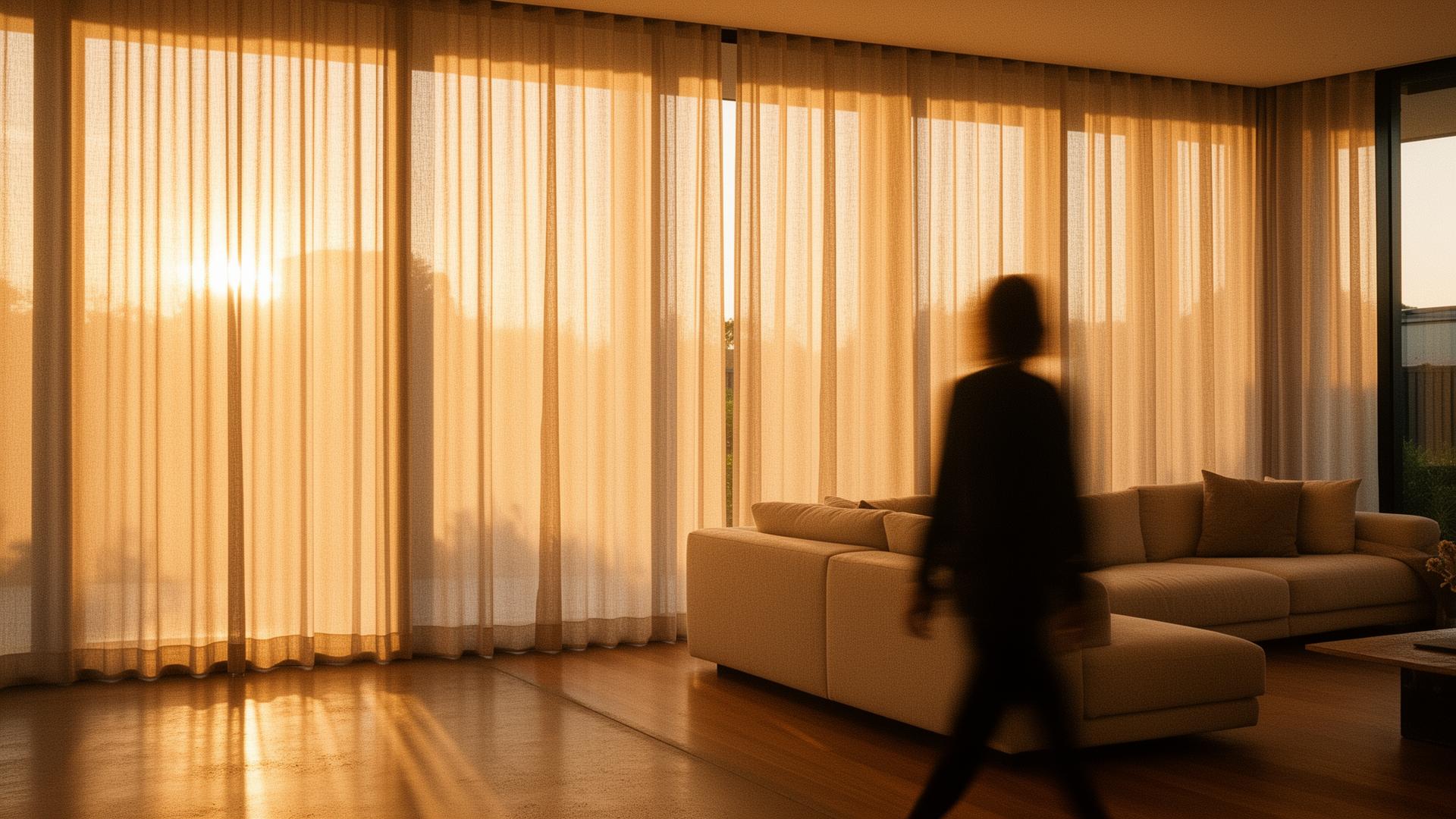
Day-night blinds (also called double rollers) fit two roller blinds onto a single bracket: a sunscreen behind a blockout. The sunscreen drops through the day for filtered light and an outward view. The blockout drops at night for full privacy and darkness. For living rooms and dining rooms in Melbourne homes, they are usually a better answer than either a single blind or a curtain combination, and they cost less than both.
Key takeaways
- Two independent blinds on one bracket: sunscreen plus blockout.
- The right answer for living and dining rooms; the wrong answer for bedrooms.
- Cost sits above a single roller, well below a sheer-and-blockout curtain combination.
- A 5 percent openness sunscreen is the default daytime fabric.
- Motorisation is straightforward; both blinds run on the same chain or motor channel.
- Saves the cost of fitting a double track if curtains were not the original plan.
Why "underrated" is the right word
Most people who want a view through the day and full privacy at night assume they need a sheer-and-blockout curtain combination. That works, and in the right room a sheer is the better look. But it is also the more expensive answer, it requires a double track planned at frame stage, and it takes up more wall space.
A double roller does the same functional job for materially less money. Through the day the sunscreen filters glare and UV while keeping the view. Through the night the blockout drops and the room goes dark. Most clients who walk into the conversation expecting curtains are surprised at how well the double roller works once they see one operating.
The specific Melbourne case where it shines is the open-plan living-dining-kitchen with a wall of north or west glazing. Sheers across that whole wall is a five-figure spec; double rollers in coordinated fabrics is half that or less, and the function is similar.
How the mechanism works
A double roller bracket holds two tubes, one in front of the other. The front tube carries the blockout fabric; the back tube carries the sunscreen. Each tube has its own chain (or motor). The two operate independently.
When both blinds are fully raised, the entire assembly stacks into a slim cassette at the top of the window, around 130 to 150mm deep. When one blind is dropped, the other stays rolled up. When both are dropped, the blockout sits in front of the sunscreen.
For a clean look, both fabrics are usually wrapped in a fascia or fitted into a recessed pelmet. New builds increasingly drop a recess into the ceiling above the window so the entire mechanism disappears when both blinds are raised.
Fabric pairing
The two fabrics need to be chosen as a pair. The sunscreen is the more visible blind through the day; the blockout is what people see from the street at night. Mismatched colours look obviously wrong.
A common safe pairing:
- 5 percent openness charcoal sunscreen with a charcoal blockout
- 5 percent openness white-on-white sunscreen with a white blockout
- 3 percent openness bronze sunscreen with a bronze blockout for north and west elevations
The full conversation on openness percentages and fabric weights is in how to choose blinds for a north-facing Melbourne home.
Where double rollers do not belong
Bedrooms. The whole point of a bedroom blind is full blackout for sleep. The sunscreen layer is wasted in a bedroom because you almost never want the daytime filter; you want either fully open (curtains drawn back, blind up) or fully closed (blind down). A single blockout roller, ideally with side channels for shift workers (covered in blockout blinds for shift workers), is the right spec.
Wet rooms. The double mechanism is fine in dry rooms but the sunscreen fabric is rarely coated for steam. A single coated roller suits bathrooms and laundries.
Period homes with traditional architecture. The cassette and double-tube look reads modern. Curtains or shutters generally suit period rooms better.
Cost versus the alternatives
For a typical 3.6m wide living room window, the rough comparison:
- Single blockout roller: cheapest option. No daytime privacy with a view.
- Double roller (day-night): mid-cost. Daytime view, nighttime privacy.
- Sheer plus blockout curtain on a double track: highest cost. Best soft look.
- Honeycomb blind: similar cost to double roller. Best thermal performance, no view through.
For most living rooms in west-Melbourne new builds, the double roller is the right balance of function and cost. For builders specifying across a development, why west-Melbourne builders use one tradesman covers the bulk-spec conversation.
Common questions
Can I motorise a day-night blind?
Yes. Each tube takes its own motor. Somfy and Automate both make motors that suit the slimline tubes used in double rollers. The two blinds can be controlled independently or grouped on a single switch.
Will the cassette look bulky on a small window?
The cassette is about 130 to 150mm deep. On a small bathroom or kitchen window that can read heavy. For windows under 900mm wide, a single roller is usually a better look. The double roller comes into its own on living and dining windows over 1500mm wide.
Do both blinds use the same operation chain?
No, each blind has its own chain (or motor). They operate independently. That independence is what makes them functionally useful; you almost never want both fully down through the day.
What is the lead time?
Three to four weeks for most stock fabric ranges, the same as a single roller. The fabric is the long-lead item; the bracket and tubes are stocked.
Will a day-night blind block heat as well as a single blockout?
Close to it. With both blinds dropped, the assembly traps a small air gap between the two fabrics, which adds marginal thermal benefit. For a genuine thermal upgrade, a honeycomb blind is the better answer.
A free measure within 40km of Altona walks through which living rooms suit a double roller and which are better with a curtain combination. Call Dany on 0468 032 236 or browse the blinds range.
Read next