
Journal · Blinds · 6 min read
How to choose blinds for a north-facing Melbourne home
North-facing rooms get the best light in winter and the worst heat in summer. The right blind handles both.
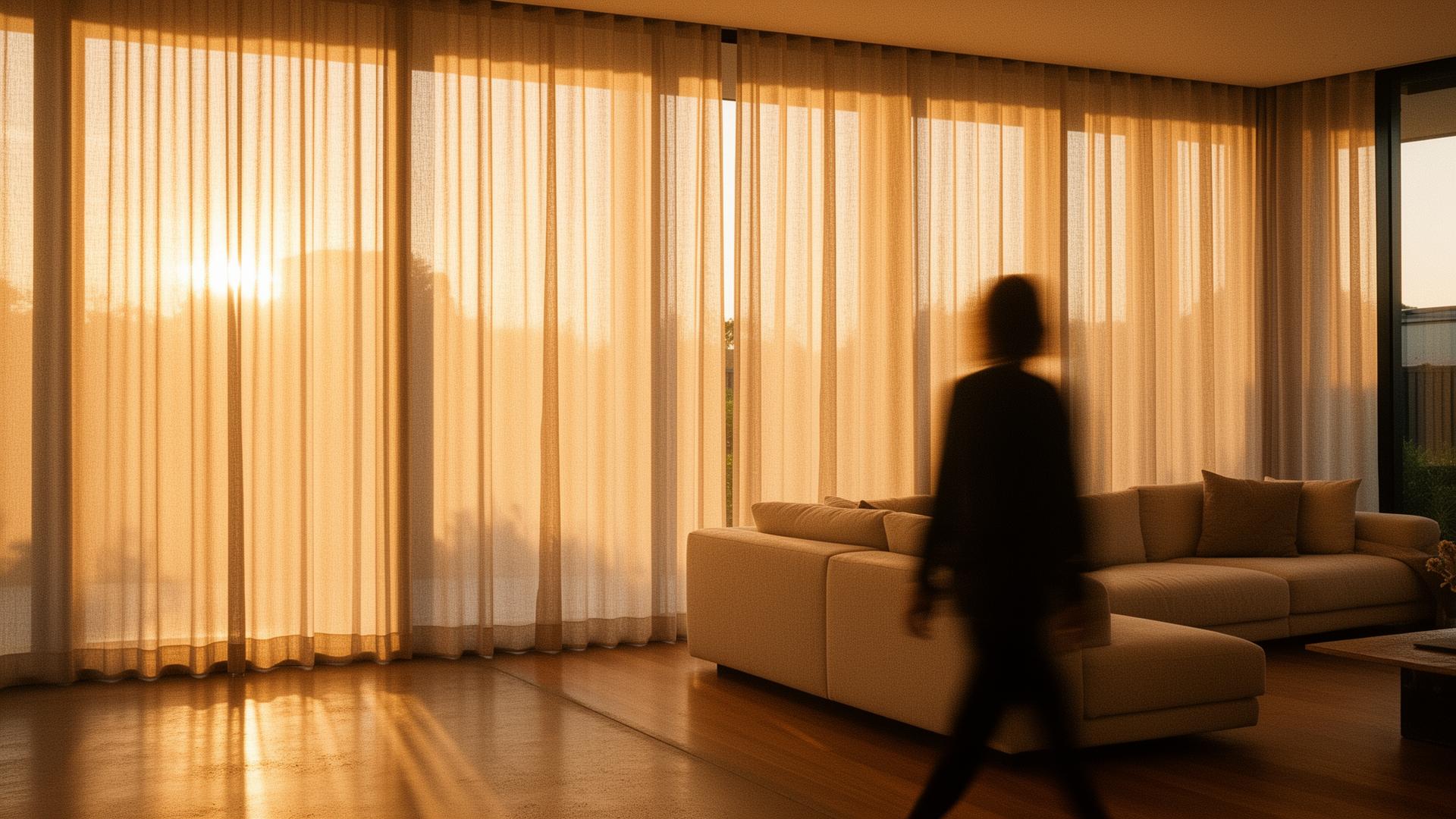
The best blind for a north-facing Melbourne window is a double roller, sunscreen behind a blockout, on a single bracket. That setup handles low winter sun and high summer sun without forcing a compromise either way. North-facing rooms are the ones everyone wants in winter and quietly resent in summer. The sun tracks low across the north through July and August, washing rooms in soft warm light. By January it sits high and harsh, and west-tilted afternoon sun joins in. A single blind has to handle both extremes.
Key takeaways
- A double roller (sunscreen plus blockout) on the same bracket is the most flexible answer for north-facing living rooms.
- A 5 percent openness sunscreen keeps the view through the day; a 3 percent reads darker and more private.
- Bedrooms almost always go blockout only, ideally with side channels to seal the dawn glow.
- For full-height glazing, pair blinds with a bronze solar film on the glass itself.
- Melbourne UV index hits Extreme (12 plus) through January, so any north or west room with timber, leather or art is at risk.
- Specify the combination at build stage rather than retrofitting two years later.
How north sun moves through a Melbourne year
Melbourne sits at roughly 37 degrees south. In late June the noon sun is only about 29 degrees above the horizon and stays in the northern sky all day. In late December it climbs to around 76 degrees. That 47 degree swing is the whole reason a north-facing room behaves like two different rooms in summer and winter.
Through June, July and August, that low sun reaches deep into the room. Floors warm. Couches sit in the sun. The room does most of the heavy lifting on heating bills for free. Through December, January and February, the sun barely enters from the north at all because it is almost overhead, but the heat load through the glass is still significant and the late afternoon western swing pushes harsh light across the same windows.
The Bureau of Meteorology rates Melbourne UV at Extreme through November to February, with peak index values of 12 to 14. That is the same UV load that damages flooring, leather and fabric over a few summers.
The double roller, in detail
A double roller fits two blinds onto one set of brackets. The front blind is a blockout, the back blind a sunscreen. The two operate independently. Through winter you keep both rolled up. Through summer the sunscreen drops during the day to cut glare and UV without losing the view, and the blockout drops at night for privacy.
We install a lot of these in Point Cook, Williams Landing, Werribee and Yarraville. They are a default for living and dining rooms. The cost sits a little above a single roller and well below a sheer-and-blockout curtain combination. For more on whether day-night blinds suit your space, the underrated post covers when to choose this over a curtain combination.
Fabric choices that age well
Fabric matters more than the mechanism. A cheap blockout PVC will crack within four or five summers on a north-facing window. A quality coated polyester fabric from a reputable supplier will go a decade and still look correct.
For sunscreens, openness percentage is the number to focus on. Five percent is the sweet spot for most living rooms: enough opacity for daytime privacy from the street, enough transparency to keep the view. Three percent reads darker and is closer to a privacy screen. One percent is essentially a soft blockout and should not be used as the front blind in a double roller.
For blockouts, look at the back coating. The dense acrylic-foam back is what blocks the light. Cheap blackout fabrics rely on a thin PVC layer that goes brittle in the sun. We stock fabrics from Shades of Elegance and Speedy Blinds because both have proven well in west-Melbourne installs.
When to add film to the glass
Blinds handle privacy and light control. They do not handle heat as well as people expect. On a hot January afternoon, even a fully closed blockout still lets significant heat through because the heat is already inside the cavity between the glass and the blind.
For full-height glazing on the north or west, a bronze or neutral solar film on the glass itself does the heat work. The film blocks heat at the glass before it enters the room. The blinds then handle the light and privacy job they were chosen for. Together, the two systems outperform either alone. The detail on which films suit which glass is in the honest cost of window tinting.
Common questions
Do I need motorisation on a north-facing blind?
Only if the blind is hard to reach (over a kitchen sink, behind a couch, above a stair) or if you want it tied to a sun sensor. We use Somfy and Automate for motorisation. Both integrate with most smart home systems. For a standard living room window where you can reach the chain, manual is fine and will outlast a motor by years.
Will a sheer curtain do the same job as a sunscreen blind?
A sheer softens light and gives some privacy, but it does not cut UV or heat the way a sunscreen fabric does. The right answer for a feature window is often both: a sheer curtain for softness, a roller behind for genuine UV control. A single sheer alone is a styling choice, not a thermal one.
What openness should the sunscreen be?
Five percent is the default for living rooms. Three percent for street-facing windows where privacy matters more than view. We bring sample arms on the measure so you can hold each percentage against your actual view before committing.
Can a single blockout do everything?
It can, but the room loses the view through the day every time you want privacy. In a living room that is a bad trade. In a bedroom it is exactly what you want. Match the spec to the room, not the house.
A free measure within 40km of Altona walks you through every window in the home and a written quote follows in one to two days. Call Dany on 0468 032 236 or browse the blinds range.
Read next