
Journal · Tint · 6 min read
UV damage in Melbourne homes: what tinting actually blocks
The number on the film matters less than where you put it.
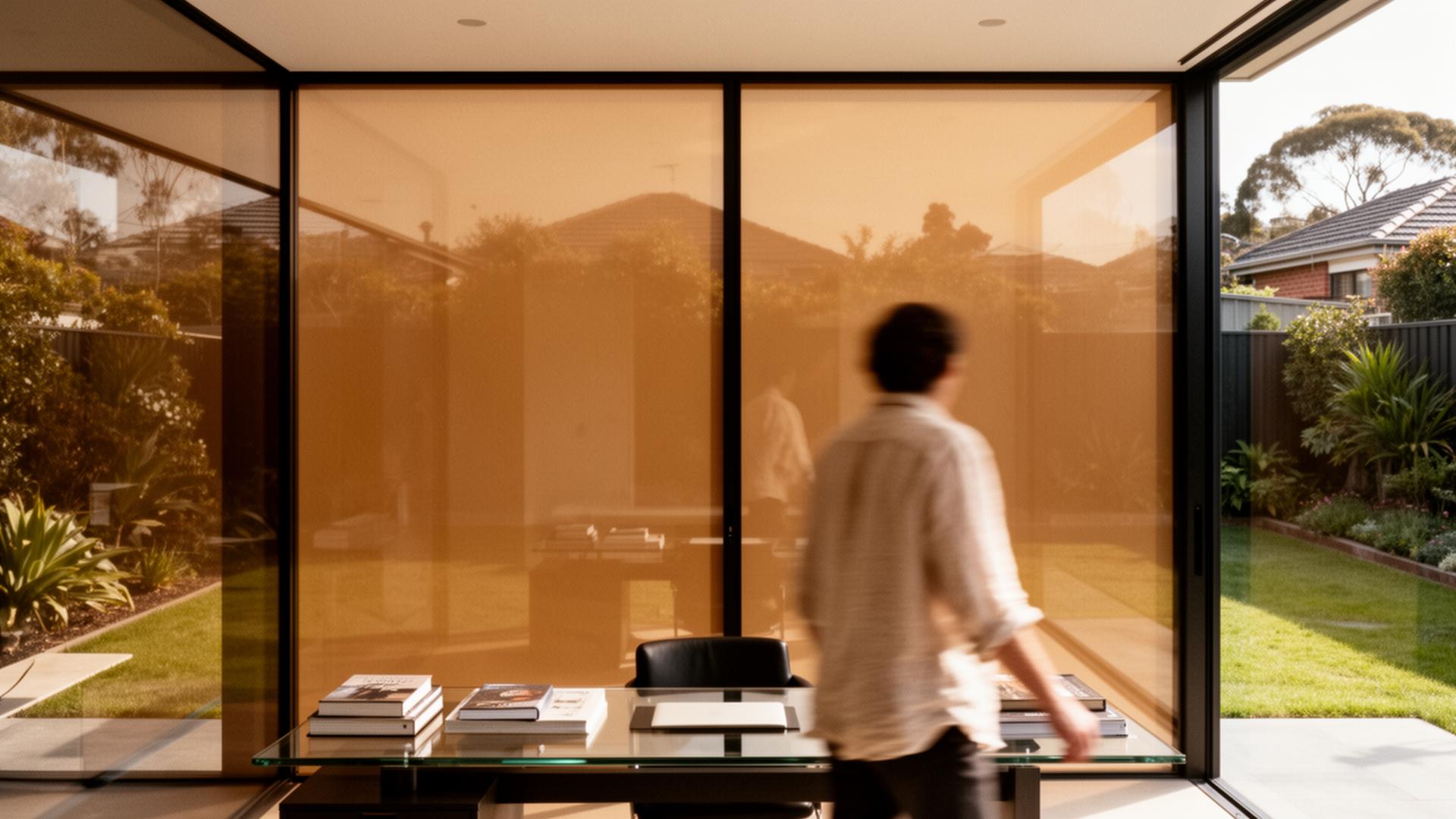
Quality architectural window film blocks 99 percent of UV across most reputable brands. UV is the single biggest cause of fading in Melbourne homes, and the Bureau of Meteorology rates Melbourne UV at Extreme (index 12 to 14) through November to February. The 99 percent number is similar across film brands and is not where products genuinely differentiate. Where they differentiate is heat rejection, clarity, and the look of the film once it is on the glass. The bigger question is where you put it, not which one you buy.
Key takeaways
- Quality solar film blocks roughly 99 percent of UVA and UVB.
- Melbourne UV index is Extreme (12 to 14) through summer; Moderate (3 to 4) through winter.
- Floors, leather and art on north and west-facing windows are the priority.
- South-facing windows almost never need film for UV protection.
- Heat rejection and visible light transmission are where films actually differ.
- Manufacturer warranties on quality film run 5 to 15 years.
What UV actually does to a Melbourne home
UV light breaks down the chemical bonds in pigments and polymers. The result, over time:
- Timber floors lose their warmth and go grey or yellow depending on the species.
- Leather lounges dry out, crack and lose colour.
- Fabric upholstery fades on the side facing the window. The back of a sofa cushion tells you within two years which side faced the glass.
- Artwork on paper or canvas fades fastest. Photographs lose contrast.
- Carpet pile bleaches in a band the shape of the window opening.
The damage is cumulative and not reversible. A timber floor that has lost its warmth cannot be brought back without sanding and refinishing.
In Melbourne, the November to February period does the bulk of the damage. The Bureau of Meteorology data shows UV index of 12 to 14 through that window, against 3 to 4 through May to August. Most homes get 80 percent of their annual UV load in 30 percent of the year.
Where film goes, and where it does not
Film is most effective on:
- North-facing living rooms and dining rooms with full-height glazing.
- West-facing windows that catch afternoon sun in summer.
- East-facing bedrooms and family rooms that catch morning sun.
- Skylights, which take direct UV all day.
Film is rarely worth installing on:
- South-facing windows in any room. The UV load is naturally low.
- Windows shaded by a deep eave or a verandah.
- Windows behind dense vegetation that already block direct sun.
A proper measure walks through every window and recommends film only where it makes a meaningful difference. We do not film south-facing windows unless the brief is privacy or decorative.
What separates one film from another
If 99 percent UV block is similar across reputable brands, where do they differ? Three places:
- Total Solar Energy Rejection (TSER): the percentage of total solar heat the film rejects. Standard dyed solar film sits around 40 to 50 percent TSER. Quality ceramic spectrally-selective film hits 60 to 75 percent.
- Visible Light Transmission (VLT): how much visible light gets through. A high VLT film keeps the room bright; a low VLT film darkens it. Ceramic films can give high TSER with high VLT, which is why they cost more.
- Reflectivity: how much the film looks like a mirror from outside. Old-style metallic films are highly reflective. Modern ceramic films are nearly invisible from the street.
For the cost trade-offs across these film grades, see the honest cost of window tinting in Melbourne.
Pairing film with blinds and curtains
Film and window furnishings work on different problems. The film handles heat and UV at the glass. The blind or curtain handles privacy, light control and visual softness.
The combinations that work well:
- Bronze solar film plus double roller (sunscreen and blockout) on living room glass. Covered in how to choose blinds for a north-facing Melbourne home.
- Neutral ceramic film plus sheer curtains on a feature window where the view matters. The sheer adds softness; the film does the heat work.
- Decorative frosted film on bathrooms (no blind needed). Covered in decorative window film for bathrooms and offices.
A blind alone does not block UV at the glass; the heat is already inside the room by the time the blind is closed. A film alone does not give privacy at night when the room lights are on. Both have a job.
Investment perspective
For a home with timber floors, leather furniture and original art, the cost calculus is straightforward. Quality film on the high-UV windows costs a few thousand dollars. The finishes it protects often cost tens of thousands. A 15-year manufacturer warranty on the film means the protection runs for the life of most flooring and furniture.
For rental properties, see blinds and tint upgrades that lift rental yield.
Common questions
Will window film stop my floors fading completely?
It blocks 99 percent of UV, which is the biggest cause of fade. There is also a small contribution from visible light and heat that the film cannot eliminate completely. In practice, film slows fade by an order of magnitude. A floor that would fade noticeably in three years without film will fade similarly in 15 to 20 years with film.
Can I install film myself?
DIY film kits exist but professional installation is meaningfully better on three fronts: the film is squeegeed flat without bubbles, the cut at the edges is clean, and the manufacturer warranty applies. Most quality film manufacturers void warranty on DIY installs.
Does film work on double glazing?
Yes, but the spec matters. Some heat-absorbing films can stress the inner pane of an IGU. We check the glass type on the measure and recommend films that suit double-glazed units without risk.
Will film make my room dark?
It depends on the film. A 35 percent VLT bronze solar film does darken the room noticeably. A 70 percent VLT ceramic film barely changes the brightness. Sample swatches on your actual glass show the difference before you commit.
How long before the film pays back?
In pure energy savings, film on west-facing glazing typically pays back in three to five years on air-conditioning alone. The protection of finishes is harder to quantify but usually adds up to many times the install cost over the warranty life of the film.
A free measure within 40km of Altona walks through every window with a UV meter and quotes only the windows that need film. Call Dany on 0468 032 236 or browse residential tinting.
Read next
Related service
Window Tinting →Frost tinting, one-way mirror film, solar heat reduction, decorative and safety film installed across Melbourne