
Journal · Tint · 7 min read
The honest cost of window tinting in Melbourne in 2026
What residential and commercial tint actually costs once you account for film grade, glass type, and access.
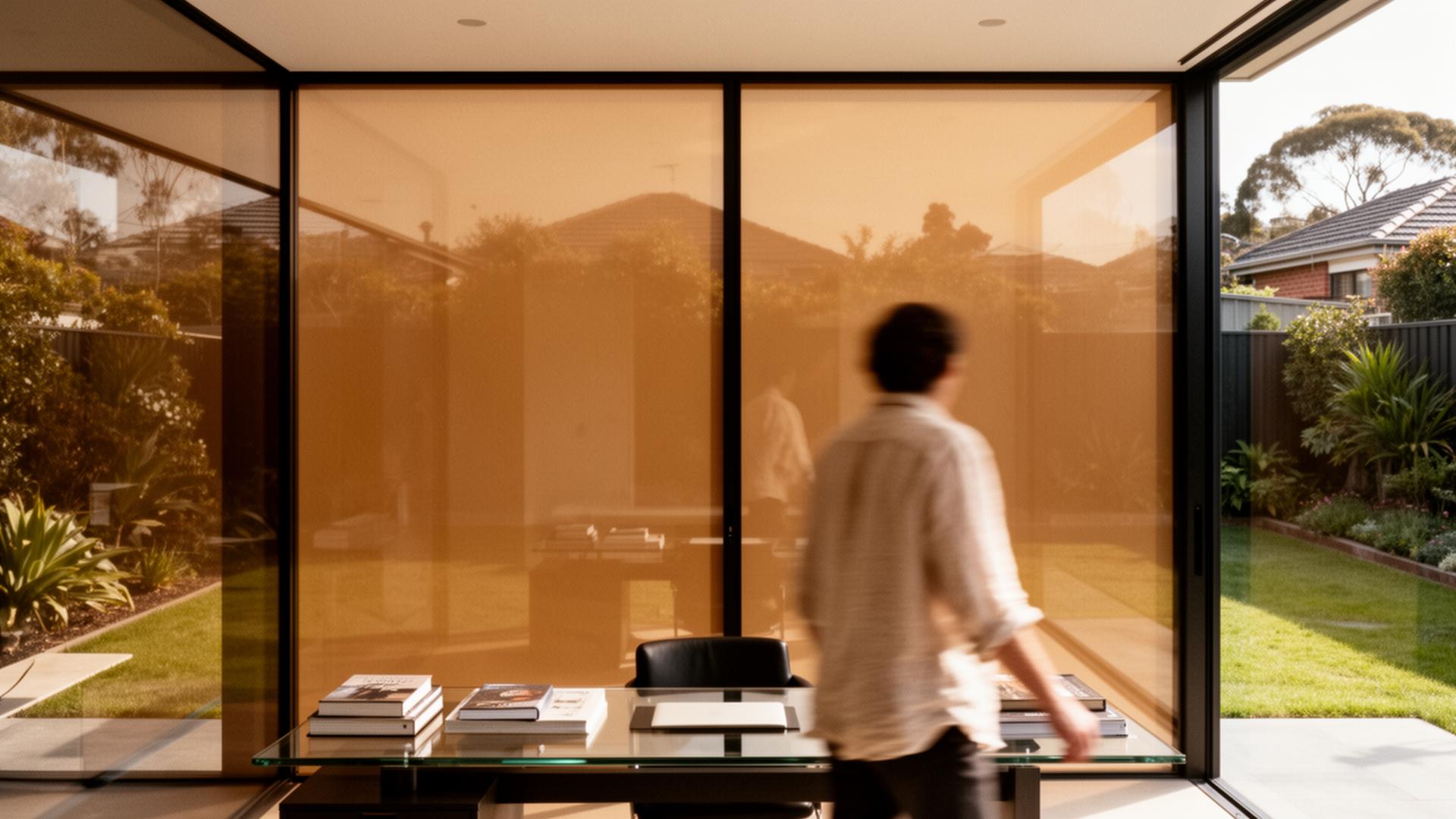
In Melbourne in 2026, residential solar film runs roughly $65 to $100 per square metre installed, frost and decorative film sits at $80 to $120, and high-spec ceramic or spectrally-selective film runs $120 to $200 plus per square metre. Commercial work is usually quoted per project because access, after-hours installation and quantity all change the number significantly. The same square metre of glass can cost twice as much to tint depending on the film grade, the access, and the type of glass underneath.
Key takeaways
- Standard residential solar film: roughly $65 to $100 per sqm installed.
- Frost and decorative privacy film: roughly $80 to $120 per sqm installed.
- Ceramic and spectrally-selective heat-rejection film: $120 to $200 plus per sqm.
- Commercial anti-graffiti and safety film is typically quoted per project, not per sqm.
- Glass type (toughened, double glazed, low-e) restricts which films can be safely installed.
- Manufacturer warranties run 5 to 15 years on quality film. Workmanship warranty is 12 months.
Why the price range is wide
Window tint pricing varies more than most other trades because the variables are hidden in places people do not check. The film cost itself is only part of the number. The other parts:
- Access: a single-storey home with clear access on a flat block is the cheapest job per sqm. A two-storey home with windows over a tiled roof or a steep driveway is significantly more.
- Glass condition: clean, undamaged, single-pane glass is fast to film. Old glass with edge damage or surface contamination needs prep work.
- Cut complexity: a single 3m by 1.5m panel is easy. Twenty small bathroom and laundry windows in a townhouse adds significant labour for the same total square metreage.
- Film grade: entry-level dyed solar film vs ceramic spectrally-selective film differs by three to four times in materials cost alone.
- Job size: a 4 sqm minimum-charge job costs more per sqm than a 40 sqm whole-home job.
Residential film pricing in detail
For a typical Melbourne home in 2026, the rough numbers we see across our quotes:
- Bronze or grey solar film on single-glazed standard windows: $65 to $90 per sqm installed.
- Neutral solar film with low reflectivity (the kind that does not change the look of the home from the street): $80 to $110 per sqm.
- Ceramic spectrally-selective film (high heat rejection without darkening): $120 to $200 per sqm.
- Frosted privacy film (full opacity): $80 to $120 per sqm.
- Decorative gradient or patterned film: $100 to $150 per sqm depending on pattern complexity.
- Safety/security clear film (4 mil and thicker, certified to AS/NZS 2208): $90 to $140 per sqm.
These are installed prices including measure, supply, fit and clean-up. Manufacturer warranties on Solar Gard and similar reputable brands run 5 to 15 years on residential applications. We add a 12-month workmanship warranty on every job.
Commercial pricing works differently
Commercial jobs are usually quoted per project rather than per sqm. The reasons:
- Most commercial work is after-hours, which adds to the labour cost.
- Shopfront glass is often large, uninterrupted plate; the per-sqm rate drops because cut complexity is low.
- Anti-graffiti work is replaced periodically, so the contract often covers ongoing replacement.
- Safety and security film for commercial code compliance has documentation requirements that add admin cost.
A typical retail shopfront tint job in inner Melbourne sits at materially less per sqm than a residential job of the same square metreage, because the glass is easy to access and the panels are large. A high-rise office tint job is usually more per sqm than residential because of access, scaffold, and after-hours scheduling.
For the specific commercial use cases, commercial window tinting in Melbourne covers the four main jobs film does in a commercial setting.
What glass type does to the price
The single most important question on a measure is what type of glass is on the window. The options:
- Standard single-pane float glass: any film can be installed.
- Toughened single-pane glass: most films can be installed but heat-absorbing dark films need careful spec to avoid thermal stress fracture.
- Double-glazed units: limits the choice of film, especially on the inner pane. Dark heat-absorbing films can fail the seal.
- Low-e coated glass: further limits the film choice. Some manufacturers void the IGU warranty if film is added.
A reputable installer will check glass type on the measure and tell you which films are safe. If a quote does not mention glass type, ask. If the installer cannot tell you on inspection, that is a signal to get a second opinion. The detail matters because a dark film on the wrong glass can crack the pane within months.
For the broader UV-and-heat conversation, UV damage in Melbourne homes covers what film actually blocks.
When ceramic film is worth the premium
Ceramic spectrally-selective film costs roughly twice as much as standard solar film. The trade-off is that it rejects heat without darkening the glass and without the metallic look that some neutral films have. For a north or west-facing living room with full-height glazing where you want the view preserved, ceramic film is usually the right answer. For a less-visible window where some darkening is acceptable, standard bronze solar film does the same heat job for half the price.
For decorative privacy applications, see decorative window film for bathrooms and offices.
Common questions
Why do quotes from different installers vary so much?
Mostly the film grade. Ask which specific film and which manufacturer is being quoted. "Solar film" can mean a $40 per sqm dyed roll or a $150 per sqm ceramic. The difference in performance and longevity is huge. A like-for-like comparison on the specific film name is the only way to compare quotes.
Is window film cheaper than replacing glass with low-e?
Yes, by a significant margin. Replacing single-glazed glass with double-glazed low-e units involves frame work, glazier labour and disposal. Film on the existing glass costs roughly 10 to 15 percent of the glass replacement cost and gives most of the heat performance.
How long does a residential tint job take?
A typical four-bedroom home with film on living and bedroom windows is a one-day job. Larger homes with more windows can run into a second day. Most commercial shopfronts are a half-day after hours.
What is the warranty?
Manufacturer warranty on quality film runs 5 to 15 years depending on the product. Solar Gard and similar reputable brands cover bubbling, peeling and excessive fade. Workmanship warranty from us is 12 months.
Do I need a permit?
For residential work, no. For some commercial buildings (especially heritage-listed or strata-controlled), there can be approvals required for visible exterior changes. We check on the measure and flag if approvals are needed.
A free measure within 40km of Altona walks through which film suits which window and gives a written quote in one to two days. Call Dany on 0468 032 236 or browse the residential tinting and commercial tinting ranges.
Read next
Related service
Window Tinting →Frost tinting, one-way mirror film, solar heat reduction, decorative and safety film installed across Melbourne