
Journal · Tint · 6 min read
Commercial window tinting for Melbourne offices and shopfronts
Solar, privacy, anti-graffiti and safety film: what each one actually does in a commercial setting.
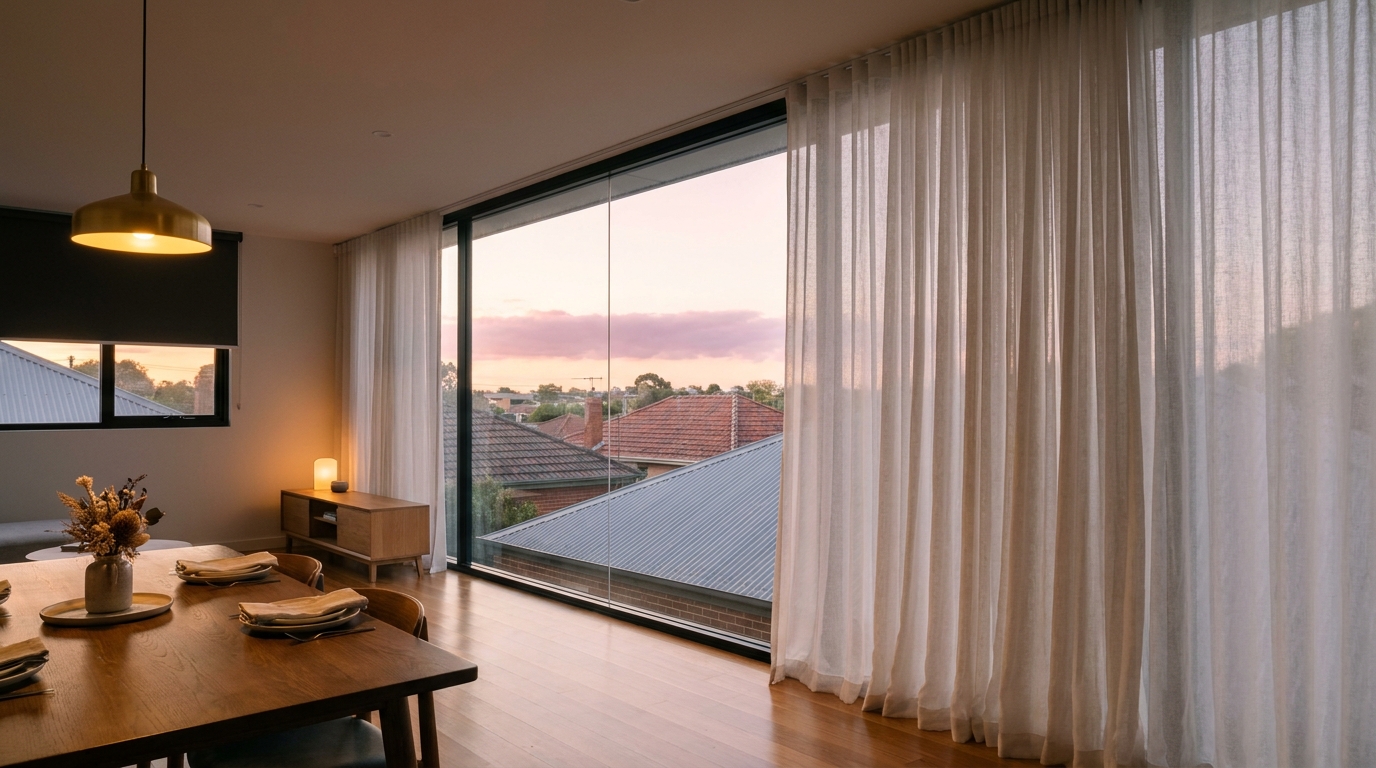
Commercial window film does four jobs in Melbourne offices and shopfronts: solar film cuts heat load and air-conditioning costs, privacy and decorative film handles boardrooms and consult rooms, anti-graffiti film protects shopfront glass from tagging and etching, and safety/security film (certified to AS/NZS 2208) holds glass together if it breaks. Most commercial jobs use a combination of two or three of these on different elevations of the same building.
Key takeaways
- Solar film on western elevations typically pays back through reduced HVAC load in two to four years.
- Anti-graffiti film is invisible from the street and replaces in hours when tagged.
- Safety film to AS/NZS 2208 Grade A is required on certain glazing under the National Construction Code.
- Decorative privacy film for boardrooms and reception is significantly cheaper than replacing glass.
- Commercial work is usually quoted per project, not per sqm, with after-hours install standard.
- Manufacturer warranties on commercial film run 5 to 15 years.
Solar film: the air-conditioning case
Melbourne offices with full-height glazing on the west or north elevation push their HVAC systems hard through summer. The afternoon heat load on a single-glazed west wall is enough to keep the air-conditioning running at peak well after the day cools down outside. Solar film on that glass cuts the heat load before it reaches the room.
A quality ceramic spectrally-selective film rejects 60 to 75 percent of total solar energy. On a 100 sqm glass elevation, that is a meaningful reduction in cooling demand. For most office buildings the pay-back through reduced HVAC running cost lands in two to four years. After that, the film is saving money for the rest of its 10 to 15 year life.
The specific film grade matters. Standard dyed solar film in commercial settings often fails on the inside-facing aesthetic; it can look mottled or patchy on large panels. Ceramic spectrally-selective film stays clean-looking. The cost gap is worth it on visible glass. For pricing context, see the honest cost of window tinting in Melbourne.
Privacy and decorative film for offices
Boardrooms, consulting rooms and ground-floor offices that face the public realm are the standard candidates. Three common specs:
- Full frost across the entire pane: complete visual privacy, full daylight.
- Gradient frost (frosted to 1500mm or 1800mm above floor, clear above): keeps the city view, blocks the sightline at desk level.
- Logo or pattern cut: branding for reception, partition walls, or shopfront glazing.
For the residential and small-office decorative options, see decorative window film for bathrooms and offices.
Anti-graffiti film for shopfronts
Shopfronts in inner Melbourne (Footscray, Yarraville, Williamstown, Spotswood, Newport) get tagged. Replacing a tagged plate glass shopfront costs thousands once removal, supply and refit are added together. Anti-graffiti film is a clear sacrificial layer that takes the damage instead.
The film bonds to the inside (or sometimes outside) of the shopfront glass. It is essentially invisible from the street. When the glass is tagged, etched or scratched, the film is peeled and a new one fitted. The glass underneath is undamaged.
For most retailers, the film pays back the first time it is used. The detail is in anti-graffiti film for inner Melbourne shopfronts.
Safety and security film and AS/NZS 2208
AS/NZS 2208:1996 is the Australian/New Zealand standard for safety glazing materials in buildings. The standard sets impact and weather test requirements for glazing materials, including film. Film products certified to AS/NZS 2208 Grade A meet the higher impact threshold and are accepted in commercial code-compliance scenarios where toughened or laminated glass would otherwise be required.
For commercial buildings, safety film is most commonly specified for:
- Large glass panels at risk of pedestrian impact (foyers, atriums, walkways).
- Glass balustrades on stairs and mezzanines (often required by code).
- Shopfront glass at risk of forced entry (security application).
- Overhead glazing where shattered glass falling on occupants is a hazard.
Film certified to AS/NZS 2208 Grade A is typically 4 mil (100 micron) thick or heavier. The film bonds to the glass and holds the fragments together if the pane breaks. It does not stop a determined break-in but it adds significant time to opportunistic ones, and it prevents injury from falling glass.
For the residential safety film conversation, see safety and security film for ground-floor homes.
How commercial pricing actually works
Commercial film is usually quoted per project rather than per sqm, because:
- After-hours install is the norm (avoids disrupting trading or staff).
- Access often involves scaffold, EWP or rope-access on multi-storey buildings.
- The film grade and quantity vary across the project (solar on one elevation, decorative on another).
- Some commercial jobs include ongoing service agreements (especially anti-graffiti).
For a typical Melbourne shopfront tint job (anti-graffiti across a 30 sqm frontage), the per-sqm cost is often lower than residential because the glass is uninterrupted plate. For a high-rise boardroom retrofit with restricted access, the per-sqm cost can be twice residential.
Project sequencing for builders
For commercial builders, the sequencing matters. Film goes on after glass is installed and cleaned, but before fit-out finishes that block access to the glass. The right window is usually after windows-in but before joinery and partition walls go up against the glass.
For builder coordination, see why builders in Melbourne's west choose one tradesman.
Common questions
Can film be applied to existing tinted glass from the manufacturer?
Yes, but check compatibility. Some heat-absorbing tinted glass cannot take additional dark film without thermal stress risk. We check on the measure and recommend films that suit.
Does film affect insurance premiums on commercial glass?
In many cases yes, downward. Anti-graffiti film often reduces glass-coverage premiums because it reduces claim frequency. Safety film can reduce liability premiums. Check with the broker.
What happens if a tenant changes mid-warranty?
The manufacturer warranty stays with the building, not the tenant. As long as the film is intact and has not been damaged, the warranty period continues from the original install date.
Can we install during business hours?
For smaller jobs (single boardrooms, ground-floor consult rooms), yes. For larger jobs across visible elevations, after-hours is usually the cleaner option to avoid disruption.
What is the lead time?
For commercial-grade film, allow one to two weeks from order to install for stocked products. Some specialist films (custom decorative cuts, certified safety film for code compliance) can run three to four weeks.
A free measure within 40km of Altona covers commercial sites across Melbourne's west and inner suburbs. Call Dany on 0468 032 236 or browse the commercial tinting range.
Read next
Related service
Window Tinting →Frost tinting, one-way mirror film, solar heat reduction, decorative and safety film installed across Melbourne