
Journal · Builders · 6 min read
Real-estate ready: blinds and tint upgrades that lift rental yield
The smallest spend that makes a rental presentation-ready and tenant-friendly.
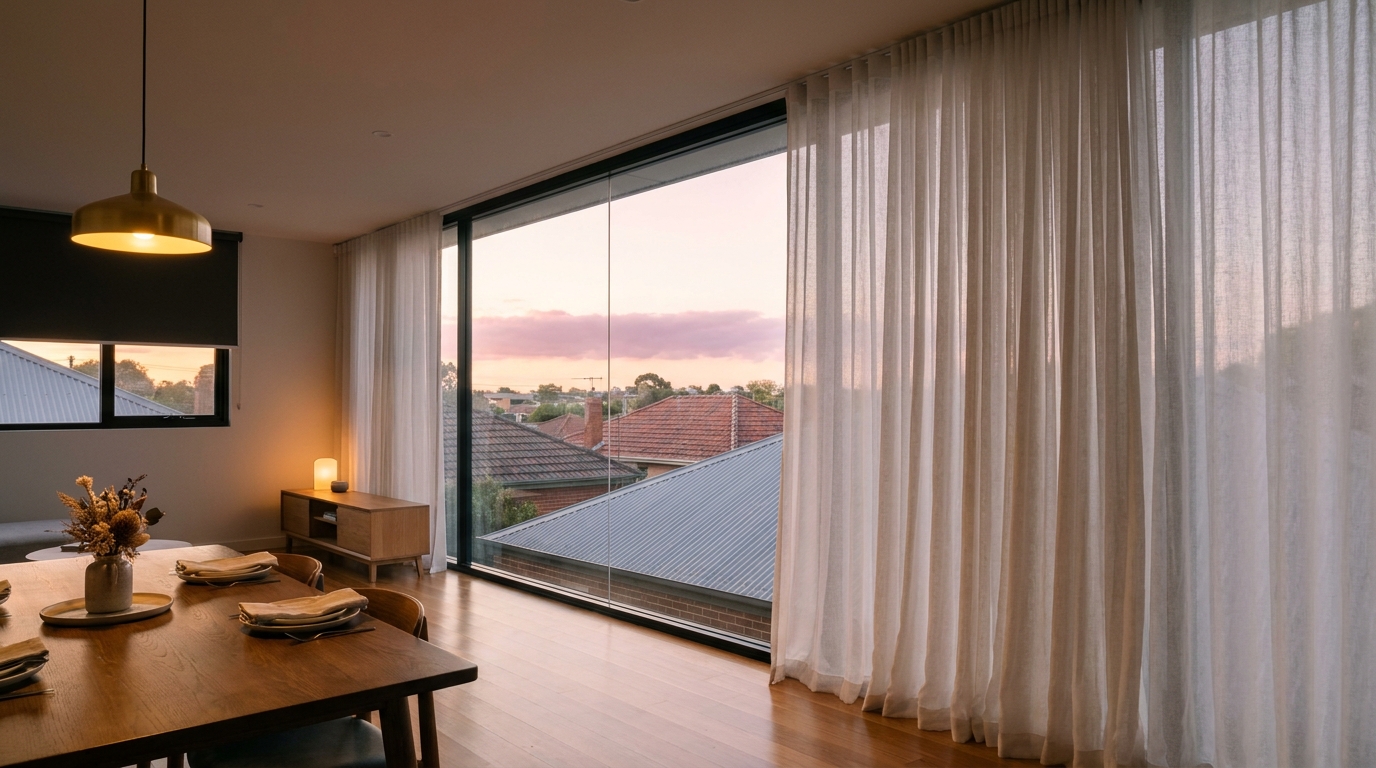
For Melbourne rental investors, the highest-return window upgrades are: quality blockout rollers in every bedroom, a day-night roller in the main living area, and bronze solar film on any west-facing living glass. That spec presents well in photos, removes the most common tenant complaints (heat, dawn light, street privacy), and pays back within two to three rental cycles for most property classes. The numbers work because window furnishings show in every listing photo and shape the first impression of the property.
Key takeaways
- Blockout rollers in every bedroom: non-negotiable for tenant comfort.
- Day-night roller in the main living area: best balance of cost and presentation.
- Bronze solar film on west-facing living glass: removes the summer heat complaint.
- Avoid white plastic Venetians; they age badly in rental use and photograph poorly.
- For higher-end rentals, S-fold sheers in the lounge meaningfully shift perceived value.
- A property manager can usually justify a rent increase that covers the upgrade within two years.
Why blinds and tint show up in the yield calculation
Three reasons window furnishings sit higher on the priority list than most rental upgrades:
- They appear in every listing photo. The bedroom shots and the lounge shot are the most-viewed images on any rental listing. Bare windows or dated Venetians read as a tired property even when the rest is renovated.
- They remove specific tenant complaints. Bedrooms without blackout draw complaints about dawn light; west-facing lounges without film draw complaints about summer heat. Both are complaints a property manager fields repeatedly.
- They are durable. A quality roller blind runs 10 to 15 years through normal rental use. The cost amortises across multiple tenancies.
For builders specifying across multiple rental developments, see why builders in Melbourne's west use one tradesman.
The minimum kit for a presentation-ready rental
The baseline spec for a four-bedroom Melbourne rental:
- Bedrooms: blockout rollers in a coated fabric. Charcoal or grey, not white. Side channels are optional but pay back through tenant retention. Detail in blockout blinds for shift workers.
- Lounge or main living: day-night roller (sunscreen plus blockout). Light through the day, privacy at night. Detail in day-night blinds, the underrated solution.
- Kitchen, dining, family: sunscreen rollers in the same fabric as the lounge sunscreen.
- Bathrooms and laundries: frosted decorative film on the glass, no blind. Detail in decorative window film for bathrooms.
- West-facing living glass: bronze solar film. Removes the summer heat complaint that drives tenants to look elsewhere.
This spec lands in the low to mid four figures for a typical four-bedroom home. The rent uplift a property manager can defend on a fully-furnished rental ranges from $20 to $50 per week depending on the suburb. At $30 per week, the upgrade amortises in roughly two and a half years.
What to avoid in a rental
White plastic Venetians: the rental industry default for two decades, and the wrong choice today. They photograph poorly (the slats look industrial), they age badly (yellow within three or four years on west-facing windows), and tenants do not keep them clean (the slats trap dust and grease). A grey or charcoal roller in a screen fabric photographs better, ages better, and is easier to clean.
Low-grade dyed solar film: the cheap film fades within three years on west-facing glass and looks patchy on large panels. Specify a quality bronze solar film from a reputable brand with a 5 to 10 year manufacturer warranty.
Sheer curtains in cheap polyester voile: they hang limp, they catch the eye in photos for the wrong reason, and they snag and tear through tenant turnover. If specifying sheers, use a heavier linen-blend; the cost difference is small and the result is durable. Detail in sheer curtains and Melbourne western light.
The mid-tier upgrade: day-night plus solar film
For properties in the $600 to $900 per week rental range, the mid-tier spec lifts the property out of the baseline pool:
- Day-night rollers in main living areas (light and privacy at all times).
- Bronze solar film on west-facing living glass.
- Side channels on bedroom blockouts (full blackout for sleep).
- Coordinated fabric and colour across the property.
This spec photographs as a step up and supports a $30 to $60 per week rent increase in most suburbs. The cost increment over baseline is modest.
The higher-end upgrade: S-fold sheers in the lounge
For properties at $900 plus per week or in tightly-held suburbs (Williamstown, Yarraville, Newport, Spotswood), S-fold sheers across the main living wall meaningfully shift the perceived value. The room reads as styled rather than basic, the photos lift, and the rent ceiling moves.
S-fold sheers in a heavy linen-blend on a ceiling-recessed track suit modern apartments and townhouses. Pinch pleat on a decorative pole suits period homes. The choice is in S-fold vs pinch pleat.
Sequencing for a refurb between tenancies
The right window for blinds and tint work is during the change-over period when the property is empty. The sequence:
- Outgoing tenant exits and the carpet/paint refresh runs.
- Window measure happens during the empty week.
- Manufacture lead time runs three to four weeks for stocked fabrics.
- Install on a single day, ideally before professional photography for the listing.
- Listing goes live with new blinds visible in photos.
The whole process can fit inside a four to six week vacancy. For tighter vacancies, ordering before the outgoing tenant leaves (with rough measurements) compresses the timeline.
For the install-day detail, see what to expect on install day.
Common questions
What about motorisation in a rental?
Not worth it for standard rentals. Motors add complexity that property managers and tenants do not need; manual rollers are simpler to operate and easier to repair. For premium rentals at the top of the market, motorisation can be specified in the main living area only.
Should I specify the same blinds across every rental I own?
If the rentals are similar properties (apartments in the same building, townhouses in the same development), yes. Bulk pricing and consistent maintenance both benefit. For a portfolio of mixed properties, spec by property class.
How does this affect depreciation?
Blinds, curtains and tint are typically depreciable as plant and equipment for tax purposes. Talk to your accountant; the depreciation schedule can offset a meaningful portion of the upgrade cost in the first few years.
What if the property is tenanted now?
We can install with tenants in place if access is arranged. The work is non-disruptive (a few hours per visit). Most landlords prefer to wait for the changeover to avoid the access conversation, but it is not required.
Is window film visible to prospective tenants on inspection?
Quality bronze film changes the colour of the glass slightly when viewed from outside; from inside, it is visible as a slight tint. It reads as a feature, not a defect, especially when the listing notes "solar film fitted" as a heat-management benefit.
A free measure within 40km of Altona, with a quote turnaround of one to two days, suits the tight timing of rental changeovers. Call Dany on 0468 032 236 or browse the blinds range and residential tinting.
Read next