6 min read
Honeycomb blinds and Melbourne winter heat loss
The most underrated thermal upgrade you can make to a window.
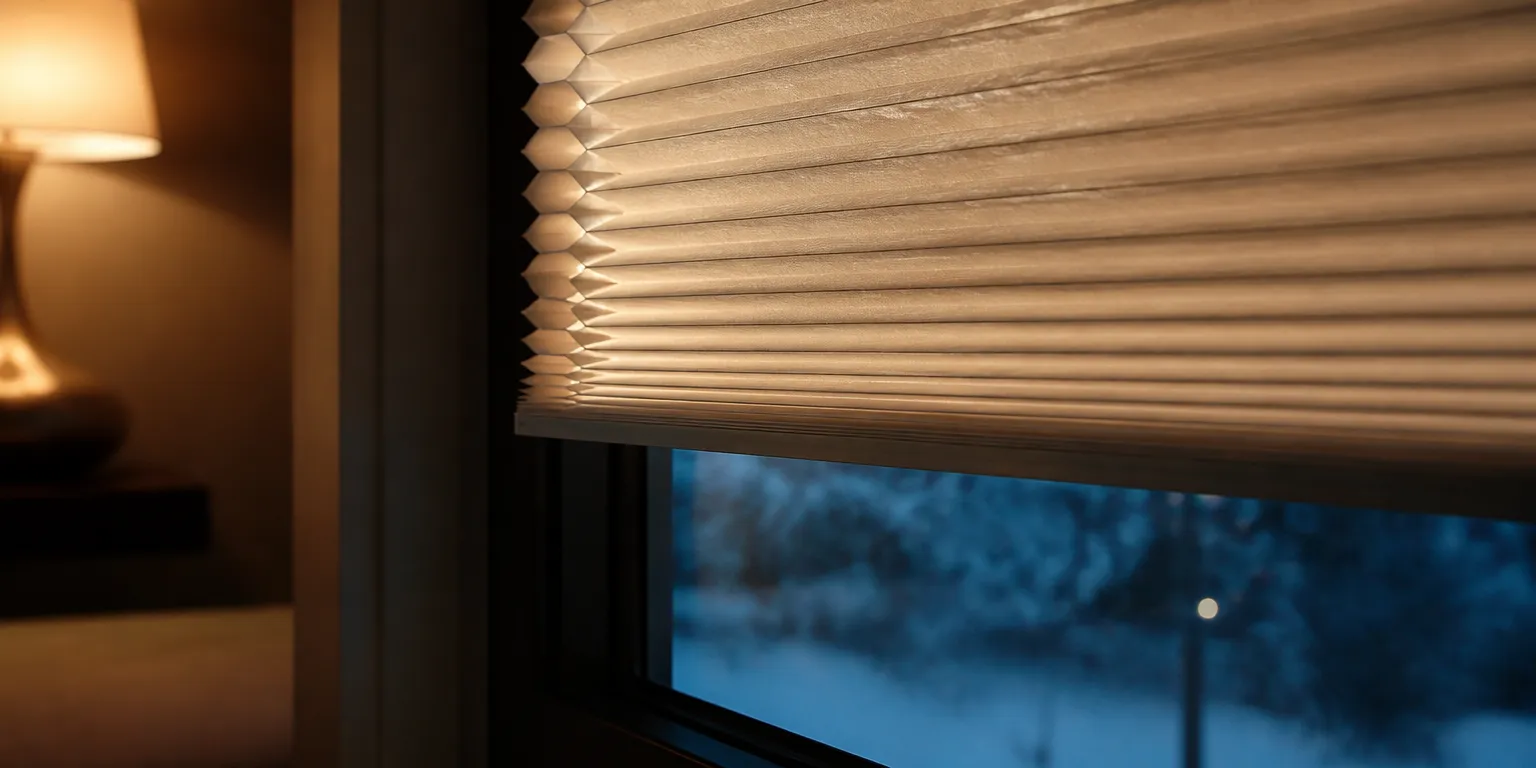
Honeycomb blinds (also called cellular blinds) are the highest-R-value window covering you can fit to a single-glazed Melbourne window. Independent industry data puts a quality double-cell honeycomb at an R-value between 2.0 and 5.0, against an R-value of about 0.9 for an uncovered single pane. Tightly installed cellular shades can cut heat loss through a window by around 40 percent in winter. For homes that cannot justify the cost of double glazing, honeycombs are the next best thermal upgrade.
Key takeaways
- Cellular fabric traps a layer of still air, which is the actual insulator.
- Double-cell honeycombs outperform single-cell on R-value but cost a little more.
- Side channels and a top headbox are essential to get the rated thermal performance.
- Available in light filter and blockout fabrics; the thermal benefit is similar across both.
- Best fit for modern interiors. The technical look does not suit period homes.
- Pay-back through reduced heating bills typically lands inside three to five years on a Melbourne bedroom.
How they actually work
The fabric is folded into a series of hexagonal cells when viewed from the side. Each cell traps still air, and trapped still air is one of the best low-cost insulators that exists. A double-cell version stacks two layers of cells front-to-back, doubling the insulating air column. The whole assembly hangs in front of the glass in much the same way a roller does.
The rated R-value is meaningless if the blind does not seal the window opening. The thermal flow path that matters is the air gap between the room and the cold glass. If air can move past the blind around the edges or under the bottom rail, the R-value of the fabric becomes irrelevant. The room loses heat through convection, not conduction.
For that reason, side channels (aluminium tracks fixed to the reveal that the blind runs inside) and a top headbox (a sealed top to stop air rising into the cavity) are the two install details that matter most. We fit both on any honeycomb job where the brief is genuine winter performance.
Blinds
Roller, Roman, day-night and Venetian
Made to measure and fitted by the same person who quotes them. One contact from measure to install.
Where they belong in a Melbourne home
The rooms that benefit most:
- Bedrooms with single glazing on the south or east, where overnight heat loss matters
- Studies and home offices used through the day in winter
- Nurseries, where temperature stability matters more than view
- Rental properties where double glazing is not on the table but tenant comfort still matters
The rooms where honeycombs are usually the wrong choice:
- Living rooms with a view (the technical fabric reads differently to a sheer or a roller)
- Period homes (the look does not suit the architecture)
- Wet rooms (the fabric is not coated for steam exposure)
For period homes that need thermal performance, plantation shutters in timber give some thermal benefit through the closed blade, plus the right look.
Light filter vs blockout
Honeycombs come in two main fabric types. Light filter fabrics let a soft glow through during the day; blockout honeycombs have an aluminised inner layer that blocks light completely. The thermal benefit is roughly similar across both because the cellular structure is the same. Choose blockout for bedrooms where dawn light is an issue (see blockout blinds for shift workers) and light filter for rooms where you want soft daylight without losing privacy.
Cost and pay-back
A quality double-cell honeycomb in a side channel installation runs above a standard roller and below a curtain combination per window. For a typical Melbourne three-bedroom home, fitting honeycombs to the four coldest bedroom and study windows is a four-figure spend. Heating cost reduction varies with the home, but the US Department of Energy puts the saving at around 10 percent of annual heating energy through tightly installed cellular shades.
In Melbourne, where average July overnight lows sit around 6 to 7 degrees and most older housing stock is single-glazed and poorly sealed, that 10 percent figure tracks with what owners actually report.
Free measure
Know what your rooms will cost
Roller blinds start around $150 a window installed. A written quote lands within two business days.
Common questions
Are honeycombs better than double glazing?
No. Double glazing remains the better thermal answer because it solves heat loss at the glass itself, day or night, blind open or closed. Honeycombs are a step below that and only perform when closed. For a renovation budget that includes glazing replacement, do the glass. For everything else, honeycombs are the next best step.
Can honeycombs be motorised?
Yes. Somfy and Automate both offer motors that suit cellular blinds. The cord-free pull mechanism is also available, which is the right choice for kids rooms where a cord is a hazard.
Will they work on a bay window?
Yes, with a separate blind on each face. The corners cannot run the cellular fabric continuously, so each pane gets its own blind in its own channel. The result still seals well if installed carefully.
How long do they last?
Quality honeycombs from reputable suppliers run twelve to fifteen years before the fabric fatigue (the cells start to lose their crisp shape) becomes visible. The mechanism itself outlasts the fabric.
What about summer?
The same trapped-air insulation works in reverse in summer: it slows heat coming in. Honeycombs on a west-facing window cut afternoon heat gain, but for genuine summer performance the better answer is solar film on the glass. Honeycombs are primarily a winter tool in Melbourne.
A free measure within 40km of Altona walks through which windows are worth honeycombing and which are better left as standard rollers. Call Dany on 0468 032 236 or browse the blinds range.
Read next