
Journal · Shutters · 6 min read
Plantation shutters for heritage homes in Williamstown
Why timber, in the right blade size and the right colour, is still the best choice for period homes.
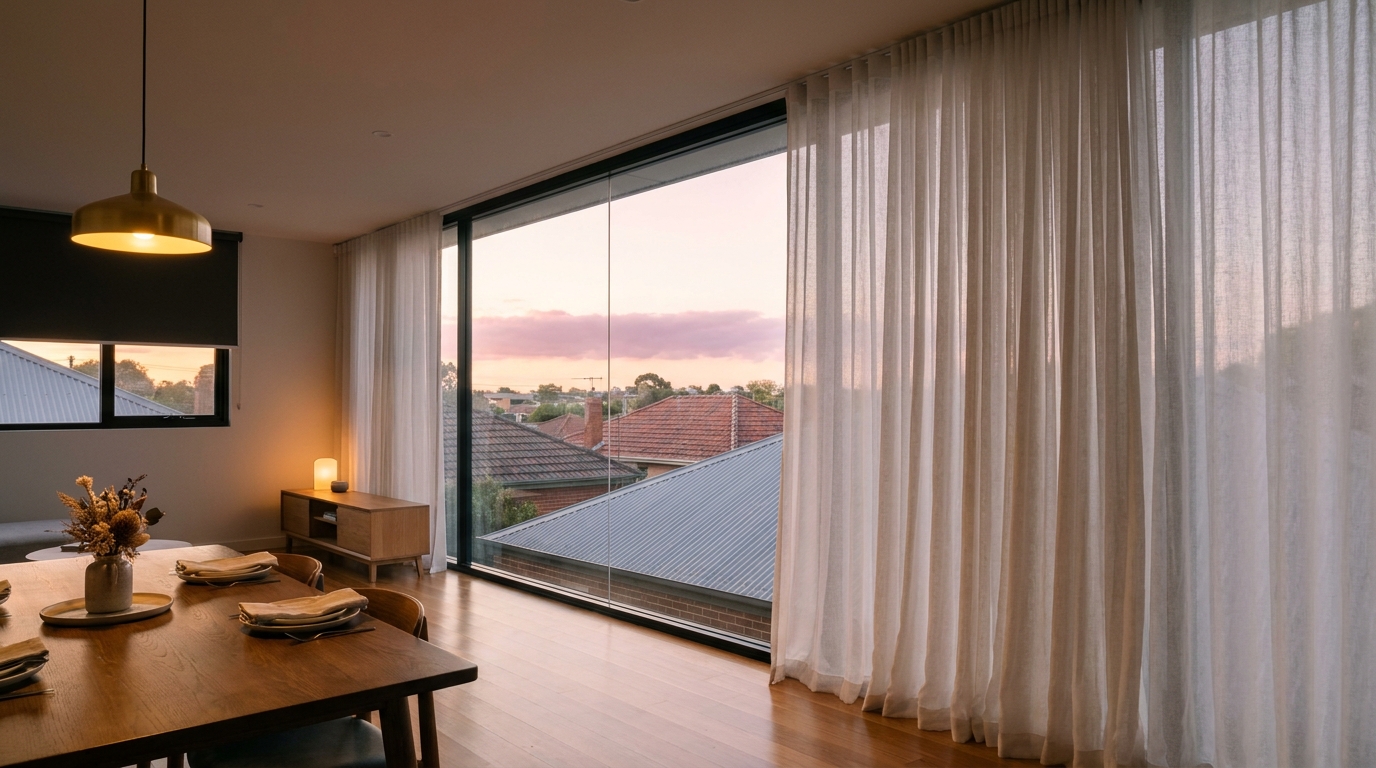
For Williamstown's Federation, Victorian and Edwardian homes, painted timber plantation shutters in an 89mm or 114mm blade in white or bone are almost always the right answer. The blade catches shadow, the painted timber respects the original joinery, and the proportions match the small original window openings these houses were built with. Hanging modern roller blinds in heritage openings rarely looks right; shutters do.
Key takeaways
- 89mm and 114mm blades suit heritage windows; 63mm blades read modern.
- Painted timber suits living, dining and bedrooms; PVC or aluminium suits wet areas.
- White and bone are the safe colour choices for period homes.
- Imported timber lead times run six to eight weeks. Locally made PVC can be two to three weeks.
- Order shutters at frame stage on a renovation, not at handover.
- Heritage overlays in Williamstown rarely affect interior shutters but can affect exterior ones.
Why heritage windows are different
Williamstown was first surveyed in 1837 and most of the heritage housing stock dates from the 1870s through the 1910s. Original windows in these homes are typically tall double-hung sashes, often with lace curtain track above. The opening proportions are vertical, the timber sills are deep, and the architraves are substantial.
A modern roller blind sized to the reveal hangs as a flat panel inside this frame and tends to read as a temporary fix. The architraves are doing the visual work; the blind has nothing to add. Plantation shutters, by contrast, fit inside the reveal and read as part of the joinery itself. The blades catch shadow through the day and the room reads as it would have when the house was built, with operable shutters or louvres at the window.
Blade size, in detail
Blade size is the single most important specification on a heritage shutter. The three options:
- 63mm: modern, contemporary. Reads small in a heritage opening. Avoid.
- 89mm: the heritage default. Suits most Williamstown windows up to about 1500mm tall.
- 114mm: large blade. Suits taller windows and rooms with high ceilings. Reads almost like an original colonial shutter.
The blade choice changes the view through the shutter when the blades are tilted open. Larger blades give a bigger view between blades. Smaller blades give more privacy when partially closed. For most Williamstown living rooms with a street-facing window, 89mm balances both. For a tall hallway or stairwell, 114mm is often the better look.
Material choice by room
Painted timber is the default for living rooms, dining rooms and bedrooms. The grain reads as joinery and the painted finish matches existing trim. The downside is that timber moves with humidity and heat, which is fine in a dry living room but not in a bathroom.
For wet rooms, aluminium or high-grade PVC in the same blade profile gives the same look without warping. The painted PVC finish from quality suppliers like CW Systems is hard to distinguish from painted timber once installed. Many heritage homes mix timber in living rooms with PVC in bathrooms and laundries without anyone noticing.
For exterior shutters, aluminium is the only option that survives Melbourne weather long-term. Heritage overlays in Williamstown sometimes restrict exterior shutter colour and profile; check with the council before committing.
Colour choice
White and bone are the safe choices for heritage homes. They match existing painted trim, they read correctly against the architecture, and they age without going off-tone. Custom colour matching to existing trim is possible but adds two weeks to the lead time and a meaningful premium.
Deep timber stains in heritage rooms tend to read as modern, not period. The original Williamstown homes had painted joinery, not stained. A stained shutter in a Federation living room will look out of place even if the timber itself is beautiful.
For a contrast colour discussion in modern rooms, day-night blinds covers the more contemporary alternative.
Lead times that builders need to plan around
Imported timber plantation shutters from quality suppliers run six to eight weeks from order to install. Locally manufactured PVC shutters can be two to three weeks. Some imported PVC programs run eight to twelve weeks if shipping is involved.
On a heritage renovation, this is the timing that matters: order shutters at frame stage, not at handover. The builder fit-out checklist walks through the full sequence. If the shutters arrive a week before paint, you can install them last and the room hands over on schedule. If they arrive eight weeks after paint, the room sits with bare windows and the client moves in late.
For heritage builders running multiple homes through the year, see why west-Melbourne builders use one tradesman for full fit-outs.
Common questions
Will plantation shutters block the view from the street?
With blades tilted fully open, the view through is largely unobstructed; you see between the blades. With blades partially tilted, the view in from the street is blocked but you still see out. With blades fully closed, both views are blocked. That flexibility is the whole point.
Are shutters more expensive than blinds?
Yes, significantly. A timber plantation shutter is roughly two to three times the cost per window of a quality roller blind. The trade-off is longevity and resale value: shutters add to the value of a heritage home in a way blinds do not.
Do shutters work on bay windows?
Yes, with separate panels for each face. The corners do not run continuously, but the blades on each face can be tilted independently, which actually works better than a single curtain or blind on a bay.
Can I keep my existing curtains and add shutters?
In a heritage room, lace or sheer curtains layered over plantation shutters is a classic look and reads correctly. Heavy drapes over shutters can read overdone. The combination is a styling choice; both will work.
What about heritage overlay restrictions?
Interior shutters are almost never restricted, even in heritage overlays, because they are not visible from the street. Exterior shutters often are restricted. Hobsons Bay Council publishes the heritage overlay rules for Williamstown; check before specifying anything visible from the public realm.
A free measure across Williamstown, Newport, Yarraville and the inner west walks through blade size, material and colour against the actual room. Call Dany on 0468 032 236 or browse the shutters range.
Read next